Directly recover unpaid rent from your tenant's bank accounts or employer, freezing assets or garnishing wages to ensure landlords can recover arrears. No tenant cooperation needed - court orders have mandatory enforcement power, making this one of the most effective legal tools for debt recovery.
Use our analysis tool to understand how garnishee orders can help recover your debts effectively.
👉Start using the Garnishee Order Consultation Tool on the right to get your personalized analysis!
⚡
Speed
24hr asset freeze upon court order
👔
Professional
Dedicated case manager support
💰
Transparent
Clear pricing, no hidden fees
🛡️
Reliable
Over 500 successful cases
Assets We Can Target
🏦Bank Deposits
💼Wages
🏠Rent Income
📈Securities
Garnishee Order Consultation Tool
Answer these questions to understand how a Garnishee Order applies to your situation
1
1Judgment
2
2Assets
3
3Amount
4
4Factors
5Result
What is your current judgment status?
A Garnishee Order requires a court money judgment first
This analysis is for reference and educational purposes only and does not constitute professional advice. Each case varies, and actual results may differ.
Step by Step Guide
Application Process
From judgment to asset recovery - we guide you through each step
0101
Obtain Judgment
First obtain a judgment for rent arrears from the Lands Tribunal or court
0202
Investigate Assets
Investigate the debtor's bank accounts, employer details, or other third-party debts
0303
Apply for Interim Order
Apply to the court for an interim garnishee order to freeze relevant assets
0404
Serve Notice
Serve the order on the third party (bank/employer) and the debtor
0505
Court Hearing
Attend hearing where court decides whether to make the order absolute
0606
Collect Payment
Third party pays the amount to the landlord as ordered
Understanding these fundamentals will save you time and money
POINT 1
Entry Ticket: You Must Have Won
This order is not for starting rent recovery - it's for enforcing results. Think of it as a powerful weapon that requires a "license" to use.
Get Judgment First
Before applying, you must already hold an official judgment from the Small Claims Tribunal, District Court, or High Court, clearly stating how much the tenant owes you.
Cannot Skip Steps
If you only have a tenancy agreement in hand, or are preparing to sue the tenant, you cannot directly skip to this step to freeze their account. This judgment is your "entry ticket".
POINT 2
Navigation Data: Target Specific Bank
This operation is not like a police search that can sweep all banks in Hong Kong - you need to provide specific "targets".
Clear Target Required
You need to clearly fill in the "Garnishee" name on the application form. If it's a bank, you must write the full bank name (e.g., HSBC, Bank of China).
Data Source
You don't need to know the specific account number (though it helps), but you must confirm they have an account at that bank. If you get the bank wrong, or they have no money there, the application fees are non-refundable.
Pro Tip
Check the tenant's previous rent payment transfer records - that's the best source of intelligence for finding which bank they use!
POINT 3
Snapshot Effect: Only Catches Current Money
This is the most commonly overlooked technical detail that could make or break your recovery effort.
Snapshot Function
This order is like a "snapshot". The bank freezes exactly how much money is in the account at the moment they receive the order - no more, no less.
Cannot Catch Future Money
If the order arrives at the bank today and the account only has $100, it will only freeze that $100. Even if $50,000 salary arrives tomorrow, this old order cannot catch that new money.
Admin Fee Warning
Each application requires court filing fees, and the bank will also deduct approximately $500-$1,000 in admin fees from the account. If the tenant's account balance is too low, after the bank's fees are deducted, what's left may not even cover your administrative costs.
Not sure if you qualify? Let us assess your case for free.
See how we helped landlords successfully recover unpaid rent through garnishee orders
Case 1
SME Bank Deposit Freeze
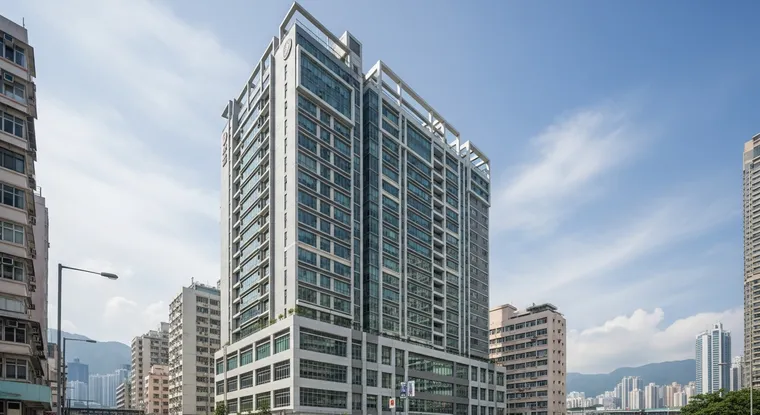
Electronic Parts Trading Co. | Kwun Tong
Size
1,500 呎 / sqft
Arrears
HK$150,000
Recovered
HK$155,000
Time
2 月 / mo
Electronics trading company defaulted after 18 months. We discovered fixed deposits at Hang Seng Bank and froze HK$180,000 within 2 weeks. Full recovery achieved in just 2 months.
Bank deposit frozen100% recovery
Read Full Case
Case 1: SME Bank Deposit Freeze
1Case Background
A landlord rented a 1,500 sqft industrial unit in Kwun Tong to an electronics trading company. The 3-year lease had a monthly rent of HK$25,000. The tenant began defaulting at month 18, accumulating HK$150,000 in arrears (6 months rent). Despite multiple reminders, the tenant cited market downturn and cash flow issues but made no payments.
2Court Proceedings
The landlord filed a claim at the Small Claims Tribunal and obtained a judgment of HK$150,000 in March 2024, plus legal costs totaling HK$155,000. The tenant still did not pay after the judgment.
3Execution Process
April 2024 — Filed garnishee order application with bank account details
Mid-April — Court issued interim order, freezing tenant's funds at Hang Seng Bank
Early May — Hang Seng Bank confirmed HK$180,000 frozen in company account
Mid-May — Court hearing issued absolute order authorizing bank to pay HK$155,000
End of May — Landlord received bank transfer, successfully recovered full amount
Freelance designer defaulted after 14 months. We applied for 3 simultaneous garnishee orders at HSBC, BEA and Hang Seng, freezing HK$65,000. Debtor settled before absolute order.
3 banks targetedEarly settlement
Read Full Case
Case 2: Freelancer Multiple Accounts
1Case Background
A landlord rented an 800 sqft commercial office to a freelance interior designer. The 2-year lease had a monthly rent of HK$12,000. The tenant started defaulting at month 14, accumulating HK$60,000 in arrears (5 months). Despite promises to pay after receiving project payments, 6 months passed with no payment.
2Investigation & Strategy
Our team investigated and discovered the tenant had accounts at HSBC, BEA, and Hang Seng Bank. As a freelancer, client payments were regularly deposited into these accounts. We applied for three simultaneous garnishee orders targeting all three banks.
Trading company had no funds, but director received HK$15,000 monthly salary. We targeted director's personal account. Court ruled funds as company asset extension despite objection.
Director accountCourt objection won
Read Full Case
Case 3: Company Director Wage Account
1Case Background
A landlord rented a 2,000 sqft industrial warehouse to an import/export trading company. The 3-year lease had a monthly rent of HK$30,000. The tenant started defaulting at month 20, accumulating HK$210,000 in arrears (7 months). Despite claiming supplier delays, the landlord waited 8 months with no payment received.
2Creative Strategy
Our investigation revealed the company had insufficient funds, but the director received a fixed monthly salary of HK$15,000 deposited to his personal Hang Seng account. We applied for a garnishee order against the director's personal account.
3Court Objection & Ruling
At the hearing, the director objected, claiming personal salary should not be frozen. However, the court ruled that as the company's beneficiary, the funds should be considered an extension of company assets. The order was upheld and HK$45,000 was recovered. A second order was then applied targeting the company's receivables.
Key Success Factors
Company had no funds, but director had personal income
We answer your most common questions about garnishee orders and debt recovery.
What is a 'Garnishee Order'? Can it help me repossess my property?
No. This is the most common misconception.
Nature: It is a debt recovery tool, not a repossession tool.
Principle: When you win a lawsuit (obtain a judgment) and the tenant doesn't pay, if the tenant has bank deposits, the court can order the bank (garnishee) to transfer the money directly to you.
Repossession tip: If you want to get back the 'keys' to the property, you need a 'Writ of Possession', which is completely different.
When can I apply for this order?
You cannot apply as soon as you discover unpaid rent. You must meet the following conditions:
Have a judgment: You must have obtained a monetary judgment requiring the tenant to pay rent arrears from the Small Claims Tribunal, District Court, or High Court.
Liquidated debt: The amount owed must be a specific sum.
Tenant has bank deposits: The bank must operate within Hong Kong (Hong Kong courts cannot reach overseas bank accounts).
What if I don't know which bank the tenant has an account with?
This is indeed a 'blind spot'. If you don't have the tenant's bank details, you can take the following actions:
Check old records: Review the tenant's previous rent cheques, transfer records, or direct debit authorization forms.
Apply for 'Examination of Judgment Debtor': You can apply to the court to summon the tenant to court, ordering them to swear and disclose all asset information, including bank account numbers. If they lie during this process, they may be in contempt of court.
How does the entire legal process work? I heard it's in two stages?
That's right. The court proceeds in 'two steps' to prevent the tenant from immediately transferring assets upon learning of the order:
Order Nisi: The court first issues a temporary order. This is an ex parte application, so the tenant won't know about it initially. Upon receipt, the bank will immediately freeze the corresponding amount in the tenant's account.
Order Absolute: The court will set a hearing date. If the tenant or bank has no reasonable objection, the judge will issue an 'Order Absolute', requiring the bank to formally transfer the frozen money to you.
If the tenant uses a 'joint account', can I still garnish the funds?
This is a major pitfall: usually no.
Legal limitation: In Hong Kong, unless the debt is jointly owed by the account holders, a 'Garnishee Order' typically cannot attach funds in a joint account.
Reason: Because the court cannot easily determine how much of the money in the account belongs to the tenant personally, versus the other (innocent) account holder. So, if the tenant smartly keeps money in a joint account with family members, this approach may not work.
Can I apply for this order against the tenant's 'employer' (e.g., to garnish wages)?
Yes, but there are techniques.
Wage garnishment: If you know where the tenant works, you can list their employer as the 'Garnishee'. The court can order the employer to directly transfer the rent arrears portion to you when paying wages.
Note: This usually applies when the tenant has a stable position at a well-known large company. If the tenant is self-employed or works at a small company with close ties to the boss, the employer may cooperate with the tenant to create the illusion of 'resignation' or 'cash payment', making enforcement difficult.
If there's less money in the bank account than the total rent owed, is this order still useful?
Yes, but the bank will 'deduct fees first'.
Amount deduction: The bank will freeze all existing balance in the account (up to your judgment debt plus interest).
Bank fees priority: As a garnishee, the bank incurs administrative fees for processing your legal documents. Usually, the bank will deduct this fee first from the account balance (typically several hundred to over a thousand HKD), and only the remaining balance will be transferred to you.
Insufficient balance: If the account only has $500 and the bank fee is $800, you won't receive a single cent.
After issuing the 'Order Nisi', can the tenant still withdraw money?
They cannot withdraw the frozen amount.
Immediate freeze: Once the bank receives the Order Nisi, the amount subject to the order (i.e., the rent arrears) is immediately locked.
Liquid funds: If the tenant's account has $100,000 and you're only claiming $30,000, the tenant can still use the remaining $70,000.
Preventing tip-offs: Court procedure requires serving the bank first, then serving the tenant later, specifically to prevent the tenant from transferring money just before the bank freezes it.
If the tenant is already bankrupt, does this order still have legal effect?
Usually becomes ineffective.
Bankruptcy priority: Once the tenant officially enters bankruptcy proceedings, the Official Receiver's Office takes over their assets. By law, all incomplete enforcement procedures (including Garnishee Orders where money hasn't been collected) must stop.
Creditor ranking: You change from a 'judgment creditor' back to an 'ordinary unsecured creditor', needing to file a claim with the Official Receiver and share remaining assets with other creditors.
Can I require the tenant to pay the legal costs for applying for this order?
Yes.
Interest and costs: When applying for the order, you can require the tenant to pay:
• The principal rent arrears stated in the judgment
• Statutory interest from the judgment date (currently about 9.25% per annum in Hong Kong courts, subject to market adjustments)
• Fixed costs for this Garnishee Order application
Practical operation: These fees will be listed in the order together, and the bank will deduct them directly from the tenant's account.
Have other questions? Contact our team for free consultation.



 Case 1