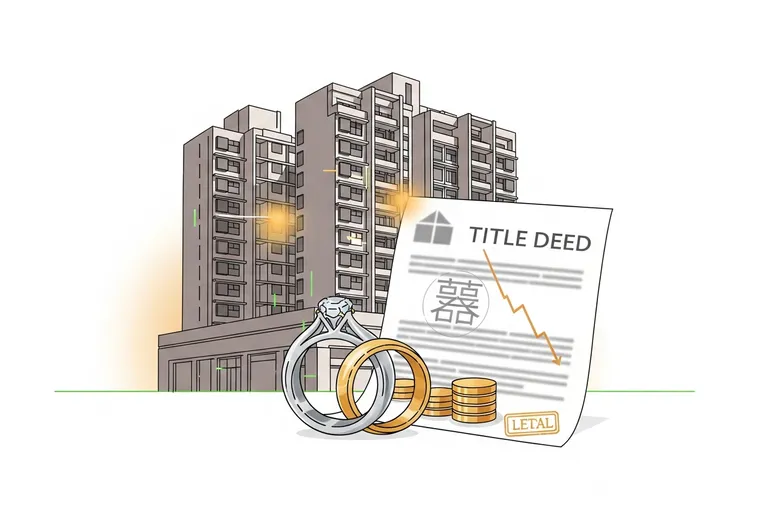
Register your judgment debt against the debtor's property. When the property is sold or transferred, you can recover your debt as a priority creditor. No debtor cooperation needed - court orders have mandatory enforcement power.
Use our analysis tool to understand how charging orders can help secure your debt against property.
👉Start using the Charging Order Consultation Tool on the right to get your personalized analysis!
🏠
Property Security
Register charge on debtor's property
🔒
Asset Protection
Prevent property sale without payment
⚖️
Priority Claim
Priority payment when property is sold
🏛️
Forced Sale
Can apply for Order for Sale
When Charging Orders Work Best
✓Debtor owns property with equity
✓Long-term debt recovery strategy
✓Prevent asset transfer
Charging Order Consultation Tool
Answer these questions to understand how a Charging Order applies to your situation
1
Judgment1
2
Property2
3
Amount3
4
Factors4
5
Result5
What is your current judgment status?
A Charging Order requires a court money judgment first
This analysis is for reference and educational purposes only and does not constitute professional advice. Each case varies, and actual results may differ.
Step by Step Guide
Application Process
From judgment to property charge registration - we guide you through each step
0101
Obtain Judgment
First obtain a final judgment for rent arrears from the court
0202
Property Search
Search to confirm property ownership and existing mortgages
0303
Apply for Interim Order
Apply to court for interim charging order, register at Land Registry
0404
Serve Notice
Serve the order on the debtor and relevant mortgage banks
0505
Court Hearing
Attend hearing where court decides whether to make the charging order absolute
0606
Forced Sale
If debtor still doesn't pay, apply for court order to force sale of property
Understanding these fundamentals will save you time and money
POINT 1
Must Have Certified Debt Document
The prerequisite for applying for a "Charging Order" is the same as the garnishee order mentioned earlier - you cannot "nail" someone's property with just a tenancy agreement or verbal promise. You must have completed the initial claim process and hold an official judgment document issued by the tribunal.
Debt Confirmation
Must have official documents listing the principal, interest, and approved administrative expenses.
Cannot Skip Steps
Before obtaining official judgment results, you cannot directly apply for property charge registration.
Document Validity
Ensure that the judgment document has not expired or been successfully set aside by the other party.
POINT 2
Verify Asset Ownership Method
This is where variables are most likely to occur. Although you can apply for a charge on property or stocks under the tenant's name, if the asset is "jointly owned" (e.g., property co-owned with spouse), the situation becomes complicated. In Hong Kong, you can only "nail" the debtor's personal share of the rights.
Search First
Before applying, you must conduct a "Land Search" at the Land Registry to confirm the correct address, lot number, and true owner identity.
Rights Distinction
Understand that you are charging the other party's "share", not absolute control of the entire property.
Asset Value
Assess whether the property is already "mortgaged out" (i.e., owes more to the bank than the property is worth), to avoid charging a worthless asset.
POINT 3
Property Charge ≠ Immediate Payment
Many landlords mistakenly believe that once the charge is successful, the tenant will immediately transfer the money. In fact, the main function of a "Charging Order" is to "queue for money" - it ensures your priority right to payment when the property is sold or transferred. If you want to proactively demand the sale, you need to apply for a separate "Order for Sale".
Negotiation Leverage
Property charge is more often used as a negotiation chip, forcing tenants who value their credit and assets to come forward to resolve the issue.
Long-term Battle
Be mentally prepared that this could be months or even years of monitoring until the other party needs to deal with the asset.
Fees & Registration
The application process involves form submission fees and Land Registry registration fees - these costs need to be advanced by you.
Real Cases
Successful Case Studies
See how charging orders helped landlords recover their debts
CASE 1
Professional Tenant Flees
Locking Non-Residential Assets
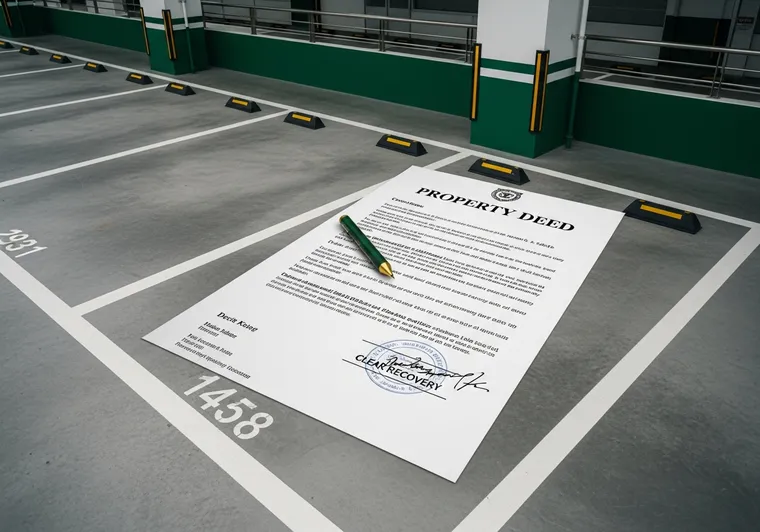
Car Park Charge
Tenant fled with no bank balance but owned a car park
Debt Amount:
HK$350,000
Asset Type:
Car Park
Result:
Full recovery with interest
View Full Case
Background
Mr. Chan (alias), a professional, rented a city apartment at HK$40,000/month. After 8 months of unpaid rent, he suddenly moved out just before receiving the repossession order, leaving nearly HK$350,000 in arrears. The landlord found that Mr. Chan had already transferred all his bank deposits, leaving only a few hundred dollars in his account. However, the landlord discovered from the earlier rental application that Mr. Chan owned a car park space in the New Territories.
Execution Steps
1Confirm Asset — The landlord conducted a land search at the Land Registry to confirm Mr. Chan was the sole registered owner of the car park.
2Obtain Entry — Using the earlier money judgment, the landlord applied for a Charging Order Nisi.
3Register Charge — After obtaining the Nisi order, immediately registered it at the Land Registry. A "Pending" charge appeared on the car park record.
4Make Absolute — After a hearing one month later, the court issued the Charging Order Absolute, officially "nailing" the HK$350,000 debt to the car park.
Deep Insight: Why This Works
Mr. Chan thought having no cash meant he was safe, but he overlooked the liquidity of the car park. A year later, when he urgently needed cash and wanted to sell the car park, the buyer's lawyer discovered the charge and demanded the debt be cleared first.
Result
Mr. Chan not only had to repay the HK$350,000 principal, but also the statutory interest at approximately 9.25% per annum during this period, plus all the landlord's administrative expenses.
Mrs. Lam (alias) owed HK$150,000 in rent. She was adamant, believing her only property - an HOS flat jointly owned with her husband - was untouchable. She thought "the landlord can't evict my family or sell my home" and bet the landlord had no recourse.
Execution Steps
1Target Beneficial Interest — The landlord understood he couldn't directly auction the whole property, but still applied for a charging order against Mrs. Lam's "Beneficial Interest" in the property.
2Serve Notice — Besides registering the charge, the landlord deliberately sent copies to Mrs. Lam's husband and the mortgage bank.
3Trigger Chain Reaction — After receiving the notice, the bank worried about property title disputes and started reviewing Mrs. Lam's financial situation, even sending inquiry letters.
Deep Insight: Why This Works
The power of this approach isn't in "selling the property" but in "disrupting harmony." Although a charging order can't immediately sell the house, it causes family members and banks to lose trust in the debtor.
Result
Mrs. Lam's husband was furious when he discovered the property had been charged, as it would affect future transfers, inheritance, and even bank loans. Under immense family and bank pressure, Mrs. Lam finally agreed to an installment plan in exchange for the landlord withdrawing the charge. Key point: Although a charging order can't immediately sell the house, it causes family members and banks to lose trust in the debtor.
A beauty company rented shop premises and went bankrupt owing HK$600,000. Fortunately, when signing the lease, the landlord insisted that the company owner, Ms. Cheung, provide a personal guarantee. Although the company had no money, Ms. Cheung owned a private residential property.
Execution Steps
1Sue Guarantor — The landlord first sued Ms. Cheung (as guarantor) and obtained a judgment requiring her personal repayment.
2Register Charge — The landlord registered the HK$600,000 debt as a charge on Ms. Cheung's residential property.
3Apply for Order for Sale — Six months after the charge, Ms. Cheung still refused to pay. The landlord took the most aggressive step - applying for an "Order for Sale" to force auction of the property to repay the debt.
Deep Insight: Why This Works
This is "maximum psychological pressure." Although the sale application procedure is relatively cumbersome, when Ms. Cheung received the "valuation and auction preparation notice" from the court, she realized this was no longer a bluff.
Result
Worried about her home being auctioned at a low price and becoming homeless, Ms. Cheung finally borrowed from relatives and friends just before the auction, repaying all arrears, interest, and the surveyor valuation fees in full.
We have compiled the most common legal procedures and practical questions that landlords are concerned about to help you quickly understand your rights.
If I know the tenant has both bank deposits and property, which should I target first?
Strategic insight: Prioritize 'intercepting deposits'. The garnishee order targets cash - once the bank successfully freezes the funds, you get your money back fastest (usually within months). While a charging order is powerful, unless you apply for a forced sale, you typically have to wait until the tenant sells the property.
Recommendation: Try intercepting bank accounts first. If the account is empty, consider 'charging' the property as long-term insurance.
Can I issue an order against the tenant's e-wallets (like Alipay, WeChat Pay)?
Current situation: Technically feasible but extremely difficult. While these institutions hold stored value payment licenses, their operational processes differ from traditional banks. Currently, the vast majority of enforcement actions still focus on licensed banks.
Steps: You need to accurately state the payment institution's official registered company name. However, considering administrative costs, unless the debt amount is huge, traditional banks remain the first choice.
If the tenant's property still has a large mortgage outstanding, is charging still useful?
Deep analysis: Look at the property's 'residual value'. Banks have first priority on the property. If the property is worth $5M but owes $4.8M to the bank, after deducting selling costs, you as a creditor may get nothing.
Solution: Do a land search before applying to see when the property was purchased. If bought many years ago, it usually has significant appreciation or most of the mortgage is paid off - in this case, the 'charge' is extremely valuable.
How is interest calculated during the rent recovery period?
Calculation formula: After obtaining the judgment, you can calculate interest based on the statutory rate. The current statutory interest is usually maintained at around 9.25% per annum.
Interest = Debt Amount × Statutory Rate × (Days after Judgment ÷ 365)
Key point: This interest accumulates automatically. When applying for the 'Absolute Order', be sure to include this interest, making the cost of the tenant's delay increasingly high.
If the tenant has a joint bank account, will this method fail?
Practical trap: High chance of failure. Unless the judgment debtors are both joint account holders (e.g., a couple who jointly signed the lease), once the bank discovers it's a joint account, they usually respond 'no authority to freeze'.
Insight: This is why 'charging' is sometimes more effective than 'intercepting money'. Although charging can only target the tenant's personal share, it can disrupt the entire property transaction, forcing the other owner (usually family) to pressure the tenant to repay.
What are the approximate administrative fees for applying for these orders?
Budget: Excluding fees for external assistance, administrative fees paid directly to relevant departments range from a few hundred to over a thousand HK dollars per item.
Hidden costs: Banks, as third-party debtors, will deduct approximately $500-$1,000 from the tenant's account for administrative expenses. If the tenant's account only has $200 left, you won't get a cent and will have to pay the application fees out of pocket.
What if the tenant immediately transfers money after receiving notice?
Mechanism safeguard: The procedure is divided into 'Interim Order' and 'Absolute Order'.
Step 1: The relevant department first issues the interim order to the bank - at this point, the tenant receives no notice.
Step 2: Upon receipt, the bank immediately freezes the funds.
Step 3: Only then is the tenant notified.
This 'act first, notify later' administrative arrangement is designed to prevent tenants from transferring assets.
Can I target the tenant's MPF (Mandatory Provident Fund)?
Policy boundary: No. According to relevant regulations, MPF is strictly protected and cannot be seized or offset against debts by creditors. You can only target their personal savings, salary, stocks, or property.
After successfully registering a charge, how do I further pressure repayment?
Advanced measure: Apply for an 'Order for Sale'. 'Charging' is just the first step. If they still ignore it, you can apply for forced auction of the property.
Solution steps: After obtaining the 'Absolute Charging Order', if the other party still hasn't paid within the specified period (e.g., one month), you can initiate the sale process. This usually draws the bank's attention, and tenants typically surrender before the auction to keep their home.
If the tenant finally pays, how do I cancel these orders?
Unlocking procedure: Once you have received all arrears (including interest and fees), you have a responsibility to help the other party 'remove the charge'.
Steps: Sign a 'Certificate of Satisfaction of Debt' and submit it to the relevant department. For property, you need to submit a document to cancel the charge to the Land Registry before the property record becomes 'clean' again.
Have other questions? Feel free to contact our professional team.


 CASE 1